Cinema and Architecture
When watching a film, what captures our attention is not only the characters or the plot, but also the spaces they inhabit. Cities, buildings, interiors, and landscapes quietly influence how we perceive the story, helping us feel immersed in the world being presented.
Architecture in cinema acts as an unspoken character. It defines atmosphere, suggests context, and often reflects the emotional state of the narrative. Whether grounded in reality or imagined entirely, these environments play a key role in shaping the viewer’s experience.
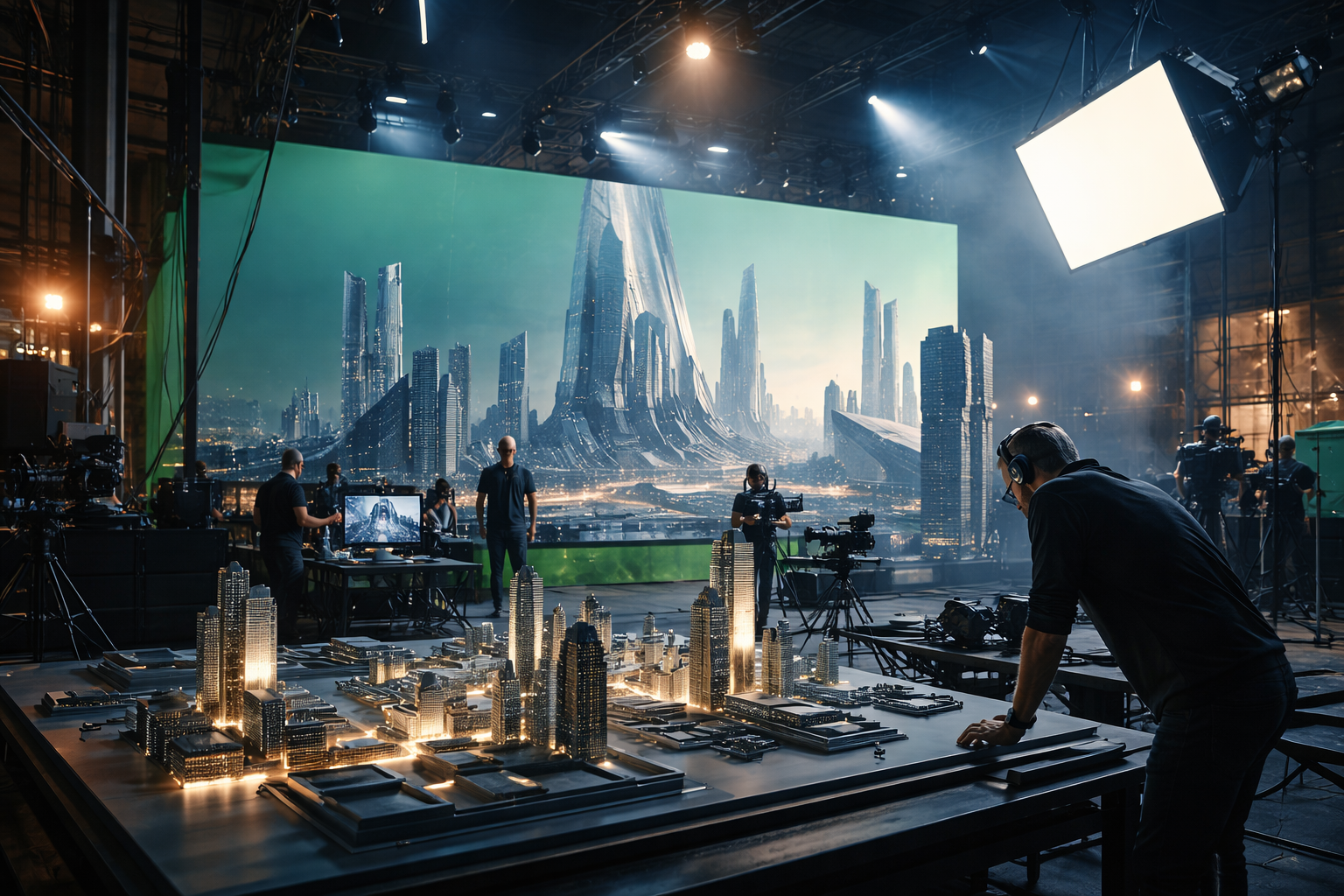
Behind this visual language are set designers and art direction teams, whose work begins long before filming starts. From pre-production to post-production, architectural thinking is present through digital models, green screens, computer-generated environments, and large-scale render pipelines that bring these spaces to life.
Architecture as a Narrative Tool
Architectural renders and digital models allow filmmakers to design environments that feel coherent and believable. They help visualize entire cities, interiors, and landscapes before a single scene is shot. This process makes it possible to explore scale, proportions, lighting, and atmosphere, ensuring that the space supports the story rather than distracting from it.
In many films, architecture does not simply exist in the background. It shapes how characters move, how scenes unfold, and how tension or calm is communicated visually.
Notable Examples of Architecture in Film
I, Robot (2004)
Set in the year 2035, the film presents a future where humans and robots coexist in everyday environments. Digital architectural models and computer graphics were used extensively to create a city that feels technologically advanced yet functional, reinforcing the idea of a highly organized, mass-produced society.
The Day After Tomorrow (2004)
This film uses digital architecture to portray large-scale environmental catastrophe. Through detailed CGI and architectural models, familiar urban spaces like New York City are transformed by extreme weather events. The realism of these digital environments makes the destruction feel immediate and immersive.
Sin City (2004)
Almost entirely constructed through digital environments, Sin City uses architecture to define its unique visual identity. Interiors and urban spaces were created using architectural models and then rendered in high-contrast black and white, enhancing the graphic novel aesthetic and reinforcing the film’s noir tone.
Inception (2010)
Architecture plays a central role in the film’s narrative. Ariadne, an architecture student, designs dream environments that bend and break the rules of reality. Cities fold onto themselves, gravity shifts, and urban landscapes behave in impossible ways, reflecting the fluid logic of dreams and the subconscious.
Blade Runner 2049 (2017)
Both the original film and its sequel present architecture as a defining element of their worlds. Massive structures, dense urban layouts, and dramatic lighting combine to create a dystopian atmosphere. Advanced digital modeling and rendering techniques were used to expand and refine these iconic cityscapes.
Star Wars: The Rise of Skywalker (2019)
The film relies heavily on digital architectural models to create environments from distant galaxies. These imagined spaces, although fictional, follow architectural principles that make them feel believable and immersive, supporting the scale and spectacle of the story.
Conclusion
Architecture in cinema helps make the impossible feel real. Through architectural renders, digital models, and visual effects, filmmakers design spaces that support narrative, emotion, and immersion. Whether depicting future cities, dream worlds, or distant galaxies, these environments are carefully crafted long before they appear on screen.
By shaping how stories are experienced visually, architectural design becomes an essential part of cinematic storytelling, quietly guiding the audience through worlds that feel complete, coherent, and alive.
If you want to see more of our 3D renderings, please visit www.therenderingco.com


